DRAKE PC1201 Passive Combiner
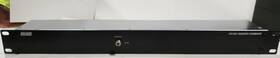
( Brand: Drake ), ( Manufacturer Part Number: PC1201 ), ( Type: Passive Combiner ), ( Color: Black ), ( Country Of Origin: China )
Review DRAKE Passive Combiner
The **Drake PC1201 Passive Combiner** is a high-performance, compact, and versatile RF (radio frequency) power combiner designed to efficiently merge multiple RF signals into a single output while maintaining optimal signal integrity, minimal loss, and robust reliability. Ideal for applications in military, aerospace, satellite communications, test and measurement systems, and advanced radar platforms, this passive device leverages cutting-edge microstrip technology to deliver exceptional performance in demanding environments. Constructed from high-quality, durable materials, the PC1201 combines two RF inputs into one consolidated output with minimal insertion loss, ensuring that signal strength remains consistent and interference is minimized. Its rugged construction, featuring a hermetically sealed enclosure, protects against environmental factors such as moisture, dust, and temperature fluctuations, making it suitable for deployment in harsh conditions whether onboard aircraft, in ground-based radar systems, or within satellite communication arrays. The combiner operates across a broad frequency range, accommodating a variety of applications from VHF to UHF bands, while its low return loss and high isolation between ports guarantee that signal quality is preserved without degradation. With a compact footprint and lightweight design, the PC1201 is engineered for ease of integration into existing systems, reducing installation complexity and maximizing operational efficiency. Whether used in military C4ISR (Command, Control, Communications, Computers, Intelligence, Surveillance, and Reconnaissance) networks, aerospace avionics, or high-frequency test equipment, this passive combiner ensures seamless signal consolidation with uncompromising performance, making it an indispensable component for professionals demanding precision and reliability in their RF applications.
**Pros and Cons of buying a Drake PC1201 Passive Combiner**
The Drake PC1201 is a passive antenna combiner designed to allow multiple antennas to feed a single receiver, commonly used in amateur radio, emergency communications, and other applications where signal diversity is beneficial. Below is a detailed breakdown of its advantages and disadvantages.
---
### **Pros**
1. **Signal Diversity and Redundancy**
The PC1201 combines two antennas into one feed line, improving signal reliability by reducing the risk of a single-point failure. If one antenna is obstructed or weak, the other can still provide a usable signal.
2. **Simple and Reliable Design**
As a passive device, it has no moving parts or electronics, which means it is less prone to failure from power issues, overheating, or component degradation. This makes it highly durable and low-maintenance.
3. **Wide Frequency Range**
The PC1201 is designed to operate across a broad range of frequencies (typically 1.8 MHz to 30 MHz, depending on the model variant), making it versatile for HF (High Frequency) amateur radio operations. This flexibility allows users to cover multiple bands without needing separate combiners.
4. **Low Insertion Loss**
Passive combiners like the PC1201 introduce minimal signal loss, ensuring that the combined signal remains strong and clear. This is particularly important for weak-signal communications where every decibel counts.
5. **Easy Installation and Integration**
The combiner is designed to be straightforward to install, with standard coaxial connectors (e.g., BNC or SO-239) that are easy to work with. It can be integrated into existing antenna systems without requiring significant modifications.
6. **No Power Requirements**
Unlike active combiners or amplifiers, the PC1201 does not require external power. This eliminates the need for batteries or power supplies, simplifying setup and reducing potential points of failure.
7. **Cost-Effective**
Passive combiners are generally more affordable than active alternatives. The PC1201 offers robust performance at a reasonable price, making it a cost-effective solution for hobbyists and operators on a budget.
8. **Reduced Cable Clutter**
By combining two antennas into one feed line, the PC1201 reduces the number of cables running to the transceiver, which can simplify wiring and organization, especially in multi-antenna setups.
9. **Minimal Maintenance**
Since there are no electronic components to wear out or calibrate, the combiner requires little to no maintenance over its lifespan. This makes it ideal for field operations or remote installations where maintenance access is limited.
10. **Compatibility with Various Antennas**
The PC1201 can be paired with a wide range of antennas, including dipoles, verticals, or loops, making it adaptable to different operating environments and setups.
---
### **Cons**
1. **Limited to Two Antennas**
The PC1201 is a dual-antenna combiner, meaning it can only combine two inputs at a time. If you need to combine more than two antennas, you would require additional combiners or a multi-port combiner, which may not be as efficient or may introduce more loss.
2. **Potential for Signal Interference**
While rare, there is a small chance of interference or interaction between the two antennas if they are too close or if their radiation patterns overlap significantly. This could result in minor signal degradation or unexpected behavior, though proper spacing and antenna orientation can mitigate this.
3. **No Gain or Amplification**
As a passive device, the PC1201 does not amplify signals. If one or both antennas are weak, the combined signal will only be as strong as the weakest input. Active combiners or pre-amplifiers may be needed for significant signal boosts.
4. **Frequency-Specific Performance**
While the PC1201 covers a wide range of frequencies, its performance may not be optimal at the very edges of its operating range (e.g., 1.8 MHz or 30 MHz). Users operating near these extremes may experience slightly higher insertion loss or reduced efficiency.
5. **No Built-In Isolation**
Passive combiners like the PC1201 do not provide isolation between inputs, meaning that signals from one antenna can potentially leak into the other. This is generally not a major issue for most applications but could be a concern in highly sensitive or critical communications.
6. **Physical Size and Bulk**
The PC1201 is a moderately sized unit, which may require some space in your shack or installation area. While not overly large, it may not be ideal for extremely compact setups or portable operations where space is limited.
7. **No Built-In Protection Against Overvoltage or Lightning**
Like all passive devices, the PC1201 lacks built-in protection against surges or lightning strikes. Users must rely on external protection devices (e.g., lightning arrestors) to safeguard their equipment and the combiner itself.
8. **Limited to Passive Use**
The PC1201 cannot be used for active functions such as transmitting or receiving signals in a way that requires power (e.g., as part of an active antenna system). It is strictly for combining signals passively.
9. **Potential for Mismatched Impedances**
If the antennas connected to the PC1201 have significantly mismatched impedances (e.g., one is 50 ohms and the other is 75 ohms), it could lead to standing waves or reduced efficiency. While the combiner itself handles this reasonably well, it s still something to consider during setup.
10. **No Built-In Monitoring or Diagnostics**
Unlike some modern electronic devices, the PC1201 provides no feedback or diagnostics. Users cannot easily monitor its performance or detect issues without additional tools (e.g., an SWR meter or signal analyzer).
---
### **Ending Conclusion**
The Drake PC1201 Passive Combiner is a highly practical and reliable tool for amateur radio operators and communicators who need to combine two antennas into a single feed line. Its passive design ensures durability and simplicity, while its wide frequency range and low insertion loss make it a versatile choice for HF operations. The combiner excels in scenarios where redundancy, ease of use, and cost-effectiveness are prioritized.
However, it is not without limitations. Its dual-input design restricts it to combining only two antennas, and it lacks active features like amplification or isolation. While these drawbacks are minor for most users, they may require additional equipment or workarounds in specialized applications. Overall, the PC1201 is a solid, no-frills solution that delivers strong performance for its intended purpose.
---
### **Recommendation**
The Drake PC1201 Passive Combiner is **highly recommended** for the following users:- **Amateur radio operators** looking to improve signal reliability by combining two antennas (e.g., a dipole and a vertical).
- **Emergency communicators** or ham radio clubs that need a simple, reliable way to diversify their antenna setup without complex electronics.
- **Budget-conscious operators** who prioritize durability and low maintenance over advanced features.
- **HF enthusiasts** who operate across multiple bands and want a versatile combiner that covers a broad frequency range.
**Consider alternatives or additional equipment if:**- You need to combine more than two antennas (in which case a multi-port combiner or active solution may be better).
- You require significant signal amplification or isolation (active combiners or pre-amplifiers would be necessary).
- Your setup involves very high-power transmissions or extreme environmental conditions (additional protection devices may be needed).
For most standard HF setups, the PC1201 is an excellent choice that strikes a balance between performance, simplicity, and cost. Its passive nature ensures longevity, while its design philosophy aligns well with the practical needs of amateur radio operators.
Details:
Drake PC1201 Passive Combiner. Comes only with whats shown in pictures. Comes from a working environment so some cosmetic blemishes may be present.
part #: pc1201 prices
- $16.58-$31.99
specifications surveillancegadgetgo:
- brand: Drake
- mpn: Pc1201
- type: Passive Combiner
- color: Black
- country of origin: China
payments surveillancegadgetgo:
- wallet: Google-pay
- other
- credit card: Discover
returns surveillancegadgetgo:
- policy: No Returns
seller surveillancegadgetgo:
- # reviews: 764
- city: Gower, Missouri
- rating: 97.8%
general surveillancegadgetgo:
- Home Surveillance > Home Surveillance Parts Accessories > Other Surveillance Parts Accessories
- condition: Open box
shipping surveillancegadgetgo:
- service: USPS Priority Mail Large Flat Rate Box
- cost: $21.95
- carrier: USPS
- type: Fixed
- class: Expedited
- transit: 4-8 Days
offer surveillancegadgetgo:
- started: April 28, 2026
- options: Ship-to-home
- sold: 0
- availability: In Stock
- best offers: True
- quantity: 1