MULTICLASS RMK40 Hid Iclass Se Proximity Magnetic Stripe Wth Reader Keypad
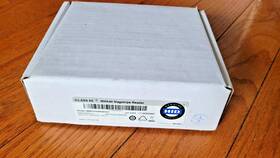
( Brand: Multiclass ), ( Manufacturer Part Number: RMK40 ), ( Model: HID RMK40 ), ( Type: Reader ), ( Country Of Origin: Mexico )
Review MULTICLASS Hid Iclass Se Proximity Magnetic Stripe Reader Wth Keypad New
The **Multiclass RMK40 HID iClass SE Proximity Magnetic Stripe Reader with Keypad** is a versatile, high-performance access control and identification device engineered to meet the demands of modern security systems. Combining the reliability of classic magnetic stripe technology with the advanced encryption and security features of HID s iClass SE proximity cards, this reader delivers a seamless and secure authentication experience for a wide range of applications. The RMK40 is designed to support multiple credential types, including HID iClass SE, iClass Classic, EM4100, and traditional magnetic stripe cards, making it an ideal solution for environments where legacy systems must coexist with cutting-edge security protocols. Its robust construction ensures durability in demanding environments, whether installed in high-traffic areas, industrial settings, or commercial facilities where reliability is paramount.
At the heart of the RMK40 is its **dual-reader architecture**, which allows it to simultaneously verify both proximity and magnetic stripe credentials, reducing the risk of credential loss or theft while maintaining backward compatibility. The integrated **12-key numeric keypad** enhances security by enabling PIN-based authentication, PIN modification, or even standalone PIN-only access, providing administrators with flexible control over user permissions. This feature is particularly useful in scenarios where temporary access is required or when additional layers of security are needed beyond proximity alone. The reader s **high-speed processing** ensures quick and smooth credential verification, minimizing wait times for users while maintaining robust security measures.
The RMK40 is fully compatible with **HID s Proximity, iClass, and iClass SE protocols**, as well as industry-standard magnetic stripe formats, making it an excellent choice for organizations transitioning from older systems to more secure, encrypted solutions. Its **low-power design** ensures efficient operation, reducing maintenance costs and extending the lifespan of the device, while its **compact and sleek form factor** allows for seamless integration into existing access control systems without compromising aesthetics. Whether deployed in office buildings, educational institutions, healthcare facilities, or data centers, the RMK40 provides a robust, scalable, and future-proof solution for access control needs.
For administrators, the RMK40 offers **easy integration** with leading access control management software, including HID s own solutions, as well as third-party systems that support Wiegand, RS-485, or Ethernet connectivity. Its **configurable settings** allow for customization of access levels, logging, and reporting, ensuring that security policies can be tailored to specific organizational requirements. Additionally, the reader s **self-diagnostic capabilities** and **troubleshooting features** simplify maintenance, reducing downtime and ensuring continuous operation. With its blend of **legacy compatibility, advanced security, and user-friendly functionality**, the RMK40 stands as a reliable workhorse in access control, bridging the gap between traditional and modern authentication methods while delivering uncompromising performance.
### **Pros and Cons of buying a Multiclass RMK40 HID iClass SE Proximity Magnetic Stripe Reader with Keypad**
#### **Pros:**1. **Versatile Access Control Compatibility** Supports multiple access protocols, including HID iClass SE, 125 kHz proximity, magnetic stripe (ISO 7816), and MIFARE Classic/DesFire. This makes it adaptable to existing systems or future upgrades without requiring a complete replacement of hardware.
2. **Dual-Interface Support** Combines proximity (contactless) and magnetic stripe (swipe) reading, offering flexibility for different user cards. This is particularly useful in environments where older magnetic stripe cards are still in use, or where users may not always have a proximity card available.
3. **Keypad Integration** The built-in keypad allows for PIN-based authentication, adding an extra layer of security. This is beneficial in scenarios where proximity alone may not be sufficient (e.g., high-security areas or shared access points).
4. **High Security with iClass SE** The HID iClass SE protocol is a secure, encrypted standard that reduces the risk of card cloning or unauthorized access compared to older 125 kHz proximity cards. This is ideal for applications requiring stronger security measures.
5. **Durability and Reliability** The RMK40 series is known for its robust construction, making it suitable for industrial or high-traffic environments where equipment may be exposed to wear and tear.
6. **Compatibility with Existing Systems** Many access control systems (e.g., HID, Assa Abloy, and others) support iClass SE, making integration with existing infrastructure relatively straightforward. This reduces the need for costly system overhauls.
7. **Future-Proofing** The support for multiple card types (proximity, magnetic stripe, and potentially others via firmware updates) ensures the device remains relevant as access control technologies evolve.
8. **Cost-Effective for Mixed Environments** In settings where both old and new card technologies coexist (e.g., legacy magnetic stripe cards alongside newer proximity cards), this reader provides a cost-effective solution to avoid purchasing separate devices.
---
#### **Cons:**1. **Complexity for Basic Use Cases** If your system only requires simple proximity or magnetic stripe access without PIN authentication, the added complexity of the keypad and multi-protocol support may be unnecessary, increasing both cost and potential points of failure.
2. **Higher Upfront Cost** Compared to a basic proximity reader or a magnetic stripe reader alone, the RMK40 is more expensive. This may not be justified if only one of the supported technologies is needed.
3. **Potential for User Confusion** Users may struggle to remember whether to swipe a magnetic stripe card or tap a proximity card, especially if both are in use. This could lead to access delays or errors, particularly in high-stress environments.
4. **Dependence on Card Type** If your organization is transitioning away from magnetic stripe cards (due to security or obsolescence), the reader s magnetic stripe functionality may become redundant over time, reducing its long-term value.
5. **Firmware and Configuration Complexity** Supporting multiple protocols may require more advanced setup and troubleshooting. IT or security staff may need additional training to configure and maintain the device properly.
6. **Limited to Specific Vendors** While iClass SE is widely supported, some legacy systems or niche applications may not integrate seamlessly, requiring additional middleware or custom solutions.
7. **Physical Size and Installation** The keypad and dual-reader design may make the device bulkier than a simple proximity reader. This could be a consideration in space-constrained installations (e.g., small door frames or tight panel mounts).
8. **Potential for Overkill in Low-Security Environments** In environments where basic access control suffices (e.g., a small office with minimal security risks), the enhanced features of the RMK40 may not provide enough added value to justify the cost.
---
### **Conclusion:**The **RMK40 HID iClass SE Proximity Magnetic Stripe Reader with Keypad** is an excellent choice for organizations that require **flexibility, high security, and compatibility with multiple card technologies**. It is particularly well-suited for:
- **High-security environments** (e.g., data centers, government facilities, or corporate offices) where PIN authentication and encrypted access (iClass SE) are critical.
- **Mixed-card environments** where both legacy magnetic stripe cards and modern proximity cards are in use, and a seamless transition is desired.
- **Future-proofing initiatives** where the ability to support evolving access control standards is a priority.
However, if your use case is **simple and cost-sensitive** (e.g., a small business with only one type of card or minimal security requirements), a **basic proximity reader or magnetic stripe reader alone** may be more practical and cost-effective.
---
### **Recommendation:** **Buy the RMK40 if:**- You need **multi-protocol support** (proximity magnetic stripe) for compatibility with existing or legacy systems.
- Security is a priority, and you want **PIN authentication** alongside encrypted card access (iClass SE).
- You anticipate **future upgrades** or need a device that can adapt to changing access control requirements.
- Your environment involves **high traffic or industrial use**, where durability is essential.
**Avoid the RMK40 if:**- You only require **one type of card technology** (e.g., only proximity or only magnetic stripe), and a simpler, cheaper reader would suffice.
- Your budget is tight, and the added features (keypad, multi-protocol) do not provide enough value for your specific application.
- Your organization is **fully transitioning away from magnetic stripe cards**, making the stripe reader redundant.
- Your IT team lacks the expertise to **configure and maintain** a multi-protocol device.
For most **mid-to-large organizations with evolving access control needs**, the RMK40 is a **strong, future-proof investment**. For smaller or simpler setups, a **dedicated proximity or magnetic stripe reader** may be the better choice.
Details:
Key Features: Adaptable Interoperable with a growing range of technologies iCLASS SOS, iCLASS SE, iCLASS, MIFARE Classic, Desire EV1 and form factors. Standardized Communications OSDP Uses Open Supervised Device Protocol for secure communications between reader and controller. Weekend or Clock Data modes. Protocol: Open Supervised Device Protocol OSDP mode.
13.56 MHz contactless smart cards supported:iCLASS SOS, iCLASS SE, iCLASS, MIFARE Classic, and Desire EV1. One Brand New Proximity/Mag stripe Card Reader with Keypad model: 925NTNNEK00101 Adaptable Interoperable a growing range of technologies iCLASS SOS, iCLASS SE, iCLASS, MIFARE Classic, Desire EV1 and form factors.
part #: rmk40 prices
- $50.00-$250.00
specifications surveillancegadgetgo:
- brand: Multiclass
- mpn: Rmk40
- model: Hid Rmk40
- type: Reader
- country of origin: Mexico
general surveillancegadgetgo:
- Home Surveillance > Home Surveillance Parts Accessories > Other Surveillance Parts Accessories
- condition: New
seller surveillancegadgetgo:
- rating: 100.0%
- # reviews: 218
- city: New York, New York
returns surveillancegadgetgo:
- policy: Returns Accepted
- time: 30 Days
- method: Money back
- paid by: Buyer
offer surveillancegadgetgo:
- quantity: 1
- sold: 0
- options: Ship-to-home
- availability: In Stock
- best offers: True
- started: February 18, 2026
payments surveillancegadgetgo:
- other
- wallet: Paypal
- credit card: Mastercard
shipping surveillancegadgetgo:
- service: USPS Ground Advantage
- class: Standard
- transit: 3-8 Days
- cost: $0.00
- type: Calculated
- carrier: USPS